- Empower Pickleball
- Posts
- Pickleball in 2026: What We're Watching Closely
Pickleball in 2026: What We're Watching Closely
Less hype, more clarity on where the game is actually headed.

Empower Pickleball
January 06, 2026


Happy New Year!
This January, we’re focused on resetting the game. Cutting through the noise. Sharing better information. Building better habits. The goal is simple: feel calmer, think clearer, and work smarter toward the goals we’re ready to crush.
We’re starting with a quick, high-level look at what we see coming in 2026 across the pickleball landscape—what’s changing, what’s stabilizing, and what actually matters.
Inside:
Why the mental side of the game decides more points than most players realize
What other sports got right—and wrong—with AI officiating
Why “pickleball is dying” headlines miss the bigger picture
How recovery is becoming part of performance, not an afterthought
And as we kick off the new year, we’re curious about how you prefer to get your pickleball content.
Where do you most often get your pickleball content? |
🔮 Pickleball in 2026: Our Predictions

We’re not calling this a report for a reason. This is our read on where pickleball is headed based on what we’ve been watching, covering, and hearing behind the scenes. Some of it is already in motion. Some of it will feel more obvious by mid-year.
Here’s what we think actually matters going into 2026.
Rules Will Matter More Than People Expect
The 2026 USA Pickleball rulebook didn’t blow things up, but it did signal a shift toward tighter enforcement and fewer gray areas. A few changes stand out more than the rest:
Rally scoring is officially sanctioned as an option, without end-game restrictions. We expect more leagues, clubs, and experimental formats to lean into it this year.
Serve legality is no longer subjective. Officials are being told to call borderline serves immediately, including clearer enforcement around paddle position and spin.
Adaptive standing play is now formally recognized, including a two-bounce allowance for eligible players. This feels like the beginning of broader, more thoughtful inclusion—not a one-off adjustment.
Our prediction: the game itself won’t feel wildly different, but competitive environments will feel more controlled, faster-moving, and less tolerant of gamesmanship.
Pro Sponsorships Will Keep Shifting—and So Will Players
The business side of pro pickleball is still very much in motion.
With the PPA and MLP operating under the UPA umbrella, big sponsorships like Carvana, DoorDash, Jenius Bank, and Edward Jones are setting a new baseline for what “serious” backing looks like. That money is changing expectations—for tours, teams, and players.
On the player side, we think 2026 is going to be noisy.
Anna Leigh Waters leaving Paddletek feels less like an ending and more like a setup for a landmark deal. With leaked images of her on court using a Franklin paddle and wearing Nike shoes, it feels like an announcement is coming sooner rather than later.
Dekel Bar’s move to 11Six signals that newer paddle brands are willing to build around pros, not just sponsor them.
James Ignatowich remains one of the most interesting names to watch. With his PPA contract uncertain and comments about not returning to the U.S., what comes next as he continues building RPM will be worth paying attention to.
Our prediction: endorsement deals will look less transactional and more strategic. Brands aren’t just buying visibility anymore. They’re buying alignment.
Growth Keeps Spreading, Not Spiking
This is where the “pickleball is dying” narrative falls apart. (You’ll read more on this below.)
Participation is still rising, just at a more realistic pace. Youth programs like the APP Academy are creating clearer pathways. International growth across Asia and Europe is accelerating. And locally, parks departments, rec centers, and clubs are still adding courts because people keep showing up.
At the same time, the gear and retail landscape is getting more crowded—and more competitive. Paddle innovation, recovery products, footwear, and off-court gear are all part of the picture now. Not every brand will survive, but the category itself isn’t shrinking.
Our prediction: pickleball’s next phase won’t be defined by explosive growth headlines. It’ll be defined by consistency, infrastructure, and staying power.
Pickleball in 2026 feels steadier. Less chaotic. More intentional. The sport isn’t trying to prove itself anymore—it’s figuring out how to live with success.
And honestly, that’s where the real work begins.
👉 Have a hot take? Reply to this email. We’d love to hear your thoughts!
🌎 Around the Picklesphere
🧘♀️ What your body needs beyond the court
⚠️ The fastest way to hurt your feet
🤟 When access becomes advocacy
🧠 The Most Overlooked Skill in Pickleball
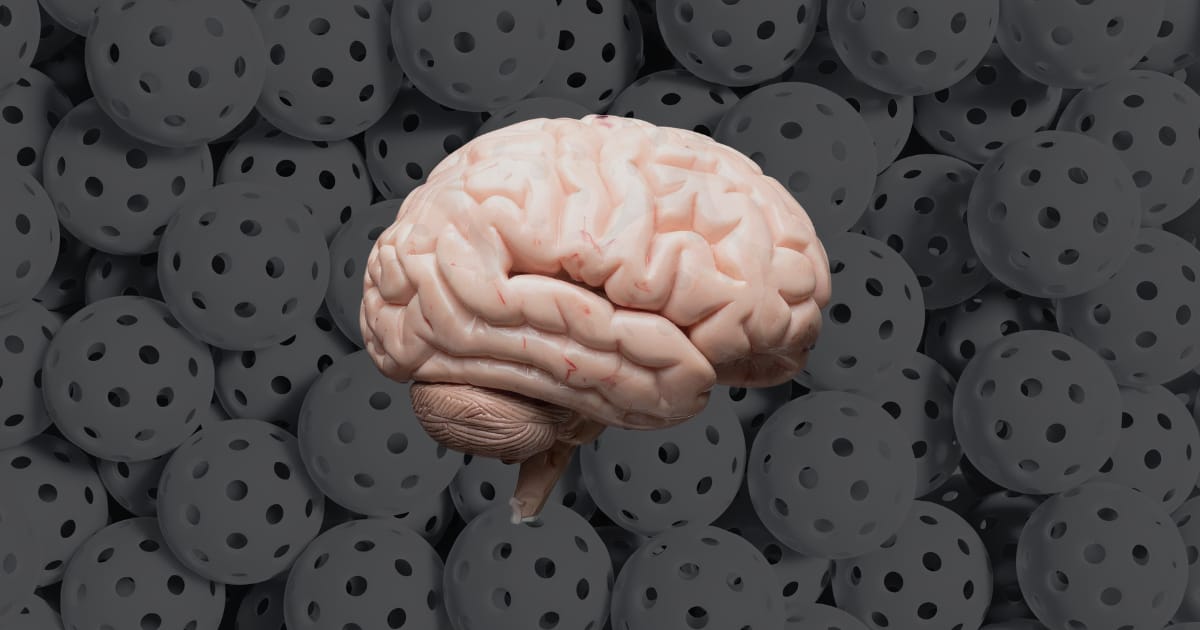
BRING THIS TO THE COURT: Both Neil and Gina are tackling the same question this week: what’s the most overlooked skill in pickleball? Neil kicks things off by focusing on the mental side of the game—and you can start applying it immediately.
Use early points to gather information instead of forcing winners
Change tactics mid-game when something stops working
Reset quickly after mistakes so they don’t snowball
Slow things down when fast exchanges feel rushed
Focus on decision-making, not just shot execution
Neil covers how to train this skill today—and we’ll find out Gina’s perspective in the Thursday newsletter.
👉 Read Neil’s take on the most overlooked skill in pickleball.
🛒 Your New Favorite Place to Feed a Gear Obsession

If you’ve ever played with someone who always shows up with a fresh paddle, a new grip, and gear you somehow didn’t even know existed—that’s Pickleball Warehouse.
They stock every major brand—Selkirk, JOOLA, CRBN, Paddletek—plus a bunch of sleepers that deserve way more love. Free shipping over $50, a 30-day paddle trial, and a price-match guarantee make it stupidly easy to try new stuff without second-guessing every purchase.
👉 Upgrade your setup with Pickleball Warehouse.
🤖 Are Other Sports a Warning for Pickleball’s AI Future?

Pickleball isn’t the first sport to test AI officiating, and that’s a good thing. Tennis, badminton, and soccer have already shown what works, what frustrates players, and where technology can quietly ruin the flow of the game.
Accuracy alone doesn’t build trust. Transparency does. Speed does. Knowing when not to intervene matters just as much as getting the call right. Pickleball still has time to get this right before bad systems become permanent.
👉 See what pickleball should borrow—and avoid—as AI enters the game.
FROM THE ARCHIVES
Pickleball & Politics
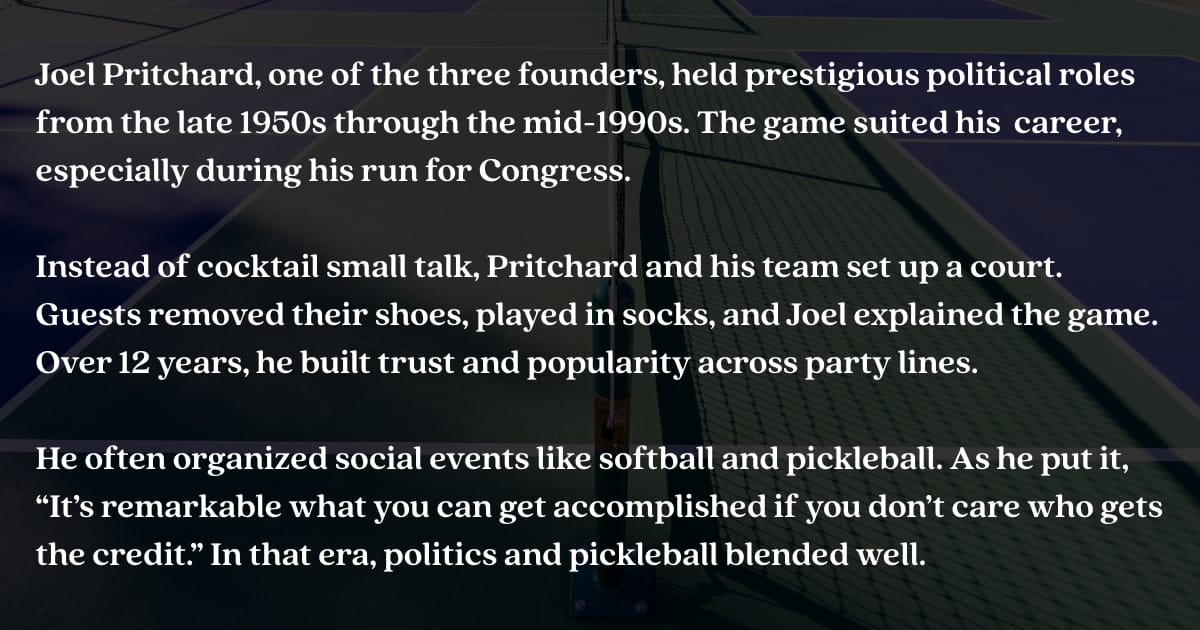
Contributed by Jennifer Lucore, Pickleball Hall of Famer and historian — author of History of Pickleball — More Than 50 Years of Fun! • Visit allpickleball.com
👀 Is Pickleball Actually Dying?
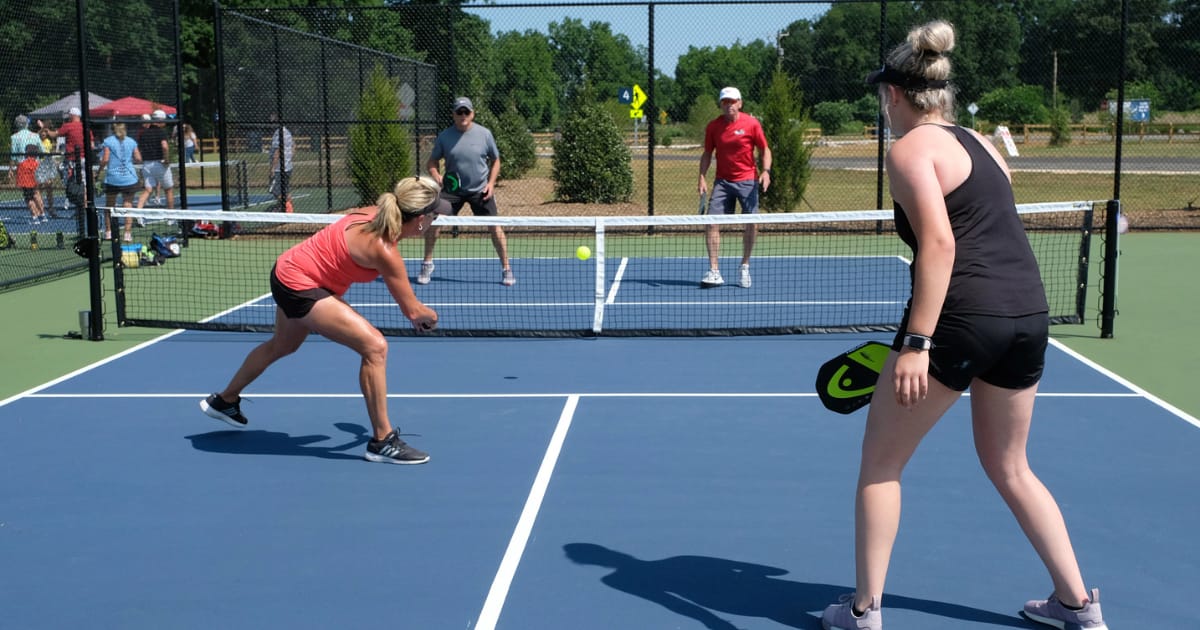
If you’ve seen the “pickleball is over” takes floating around, you’re not wrong—they’re loud. But they’re also skipping a lot of context. Facility closures and cooling hype don’t automatically mean fewer players or an empty future.
What’s really happening is a correction. Some business bets missed. The sport itself didn’t. And once you separate the noise from the number, the picture looks a lot more stable than social media wants you to believe.
🩴 Why Recovery Is Becoming the New Performance Edge

VKTRY built its name on carbon fiber insoles and explosive movement. Now the brand is shifting focus to something just as important: what happens after play. As sports like pickleball demand longer days, harder courts, and less downtime, recovery is becoming part of performance, not an add-on.
From recovery slides to “always-on” footwear, VKTRY’s expansion reflects a bigger industry trend toward longevity. The question isn’t how hard you can play today, but how well your body holds up tomorrow.
👉 Learn why recovery is becoming the next battleground in sports performance.

January 19-25: PPA Indoor National Championships - Lakeville, MN
January 22-25: NPL Suncoast Open - Pinellas Park, FL
January 25-30: VibeGetaways Turks & Caicos with Neil Friedenberg - Providenciales, Turks & Caicos *Only a few spots remaining!
February 9-14: APP Kuala Lumpur Open - Selangor, Malaysia
February 9-15: PPA Cape Coral Open - Cape Coral, FL
February 13-16: National Junior Pickleball Houston Regional - Houston, TX
March 5-8: National Junior Pickleball Eastern Regional - Raleigh, NC
March 26-29: APP AARP Open - Seattle, WA
Partner With Us?
Every week, our newsletter lands in inboxes of players who live and breathe pickleball. They come to us for the latest news, gear, drills, and stories that celebrate the people behind the sport.
Does your brand believe in growing the game and supporting the people who play it? Let’s make something happen.
