- Empower Pickleball
- Posts
- Special Edition: Find Your Next Paddle
Special Edition: Find Your Next Paddle
Our 2025 Paddle Guide breaks down the gear, the trends, and the player favorites worth your time.

Empower Pickleball
October 29, 2025 • Estimated Reading Time: 6 minutes


Let’s face it—choosing a paddle in 2025 isn’t simple. Foam cores, raw carbon faces, thermoforming, hybrid shapes… it’s a gear jungle out there. The options are endless, the marketing is loud, and the specs can feel like a foreign language.
That’s where we come in. We’ve cut through the noise, tested the tech, and pulled together the paddles, trends, and insights that actually matter. From pro-level signatures to sleeper standouts, this guide is built to help you find the gear that fits your game—not just the hype.
Think of it as your shortcut to the future of pickleball. Let’s dive in.
TECHNOLOGY
The Future is Now: Where Paddle Technology is Heading
Paddle technology hasn’t just inched forward—it’s leapt. The last six months have brought more change than the last six years, with new cores, fresh materials, and surface designs reshaping how the game feels in your hands.

Breaking the Mold: Beyond Honeycomb
For decades, polypropylene honeycomb ruled paddle cores. Now, solid foam and foam-injected hybrids are creating bigger sweet spots, less vibration, and a smoother feel. The edge-foam trend, in particular, is giving players forgiveness on mishits and reducing arm strain.
Kevlar Power vs. Carbon Control
Kevlar has burst onto the scene with lightweight strength and raw explosiveness—perfect for aggressive hitters, though trickier to tame. Carbon fiber, meanwhile, is still the industry’s anchor: textured, gritty surfaces designed to grab the ball longer, add spin, and hold up through heavy use.
Foam Injection: The Game-Changer
High-density foam along the paddle’s perimeter doesn’t just soften the blow—it increases twist weight, reduces torque, and makes the paddle more stable overall. Players chasing consistency will notice the difference.
Surface Innovation: Dwell Time & Spin
Carbon fiber’s grit technology has evolved into true spin machines. Extended dwell time lets advanced players work precision dinks or crank topspin drives with confidence.
👉 Read the full article for Neil’s deep dive on what’s next in paddle design.
QUICK GUIDE
Paddle Lingo, Broken Down (Does It Really Matter?)

You’ll see paddle specs tossed around online—swing weight, twist weight, balance point. Pro players and gear junkies love these numbers, but do they really matter for the average player? Short answer: not much. But if you’ve ever wondered what they mean (and whether you should care), here’s a simple breakdown.
Swing Weight
This tells you how heavy the paddle feels when you swing it.
Higher swing weight = more power, but harder on your arm and slower in hand battles.
Lower swing weight = easier to move quickly, less built-in power.
👉 If you’re new, start with something on the lighter side. If you need more pop later, you can always add small weights to the head of the paddle for extra power.
Twist Weight
This is about forgiveness—how stable the paddle feels when you don’t hit the sweet spot.
Higher twist weight = bigger sweet spot, steadier on off-center hits.
Lower twist weight = smaller sweet spot, more noticeable mishits.
👉 A thicker paddle (like 16mm) usually has a higher twist weight, which means more forgiveness. Paddle shape also plays a role—teardrop designs often stretch the sweet spot.
Balance Point
This is where the weight sits in the paddle.
Head-heavy (higher balance point) = more carry through the ball, but slower to maneuver.
Handle-weighted (lower balance point) = quicker hands, easier control.
👉 You can often spot this just by looking: a short handle with a big paddle face usually means more weight up top.
So, should you stress about these numbers?
Not really. For 99% of players, it comes down to three basics:
Weight (does it feel comfortable in your hand?)
Thickness (thicker = control, thinner = power)
Materials (fiberglass = pop, carbon fiber/graphite = control)
If a paddle feels good, plays the way you want, and doesn’t hurt your arm, that’s what matters most. The rest is fine print.
QUICK GUIDE
The Ball Debate: How Your Paddle Changes Everything
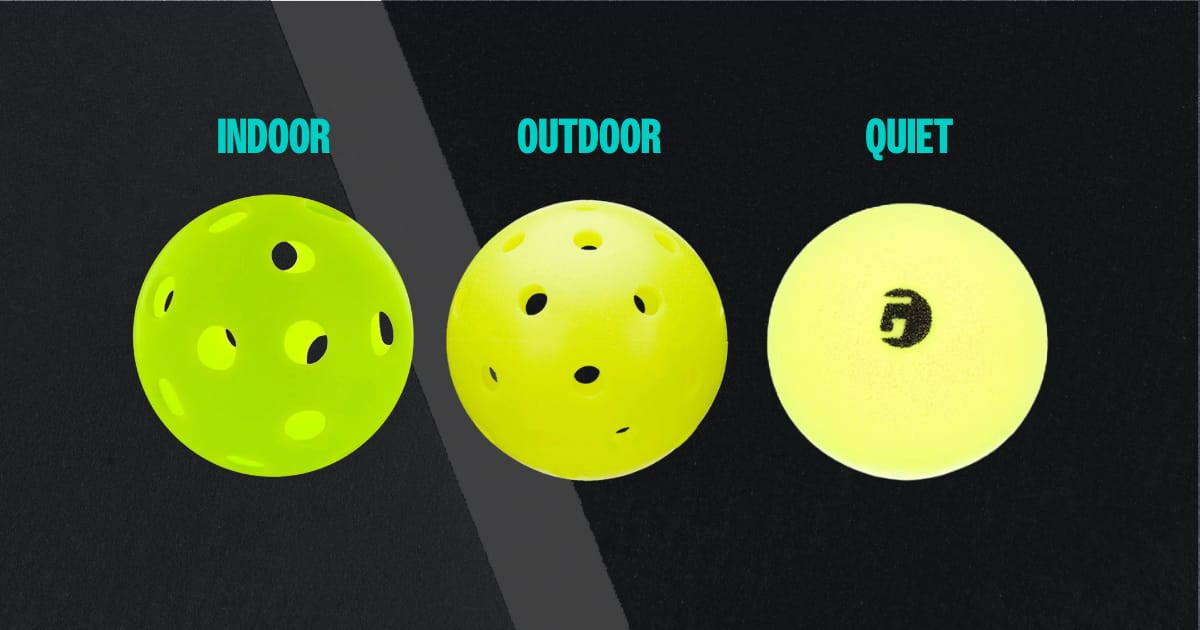
The ball you use matters just as much as your paddle face. Outdoor, indoor, or quiet balls all react differently with carbon, composite, fiberglass, and graphite—which means your paddle might feel like a different weapon depending on what you’re hitting.
Carbon Fiber
Outdoor: Power + spin + control = the most popular combo
Indoor: Softer, less power, more flex
Quiet: Consistent bounce, not as fast
Composite
Outdoor: Balanced flight, power, and spin
Indoor: Less power, more flex with bigger holes
Quiet: Slower bounce, similar to indoor
Fiberglass
Outdoor: High power, less control
Indoor: Still powerful, but reduced deflection
Quiet: Slower, less noticeable difference
Graphite
Outdoor: Soft deflection, precision placement
Indoor: Even softer feel, better control
Quiet: Consistent but slower bounce
Note: Many communities are now mandating quiet balls. They reduce speed and impact sound, which makes rallies slower and flattens out the differences between paddle materials.
PICKLEBALL GEAR
Paddles That Change the Game in 2025
Pickleball has never seen a shake-up like this. In 2025, paddles are reinventing the game. Foam cores are rewriting feel, carbon faces are grabbing the ball harder than ever, and thermoforming has gone from fringe technology to the new standard.
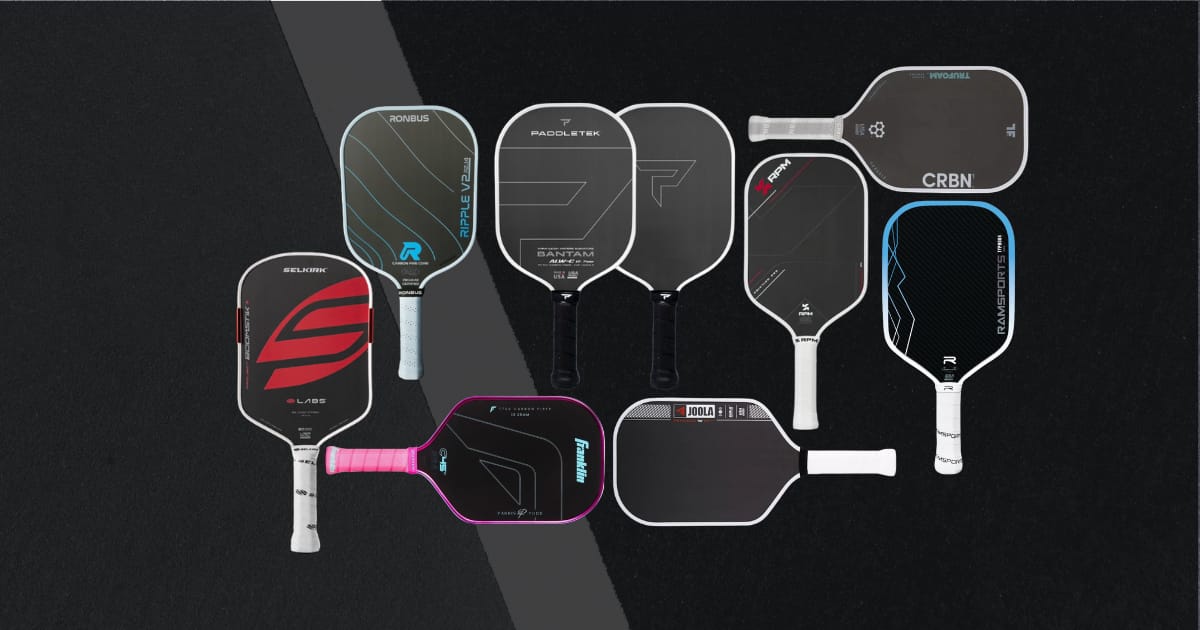
JOOLA Ben Johns Perseus Pro IV
Trusted by the world #1, this thermoformed, foam-perimeter beast combines explosive power with reliable spin.
CRBN TruFoam Genesis Series
The paddle that sparked the foam-core revolution. By eliminating honeycomb, CRBN delivered unmatched consistency, touch, and durability.
Paddletek Bantam ALW-C
Anna Leigh Waters’ signature paddle blends classic Bantam control with a raw carbon face—giving players spin without sacrificing feel.
👉 See the full lineup of 2025 paddles defining the game.
Design Your Dream Court with VersaCourt
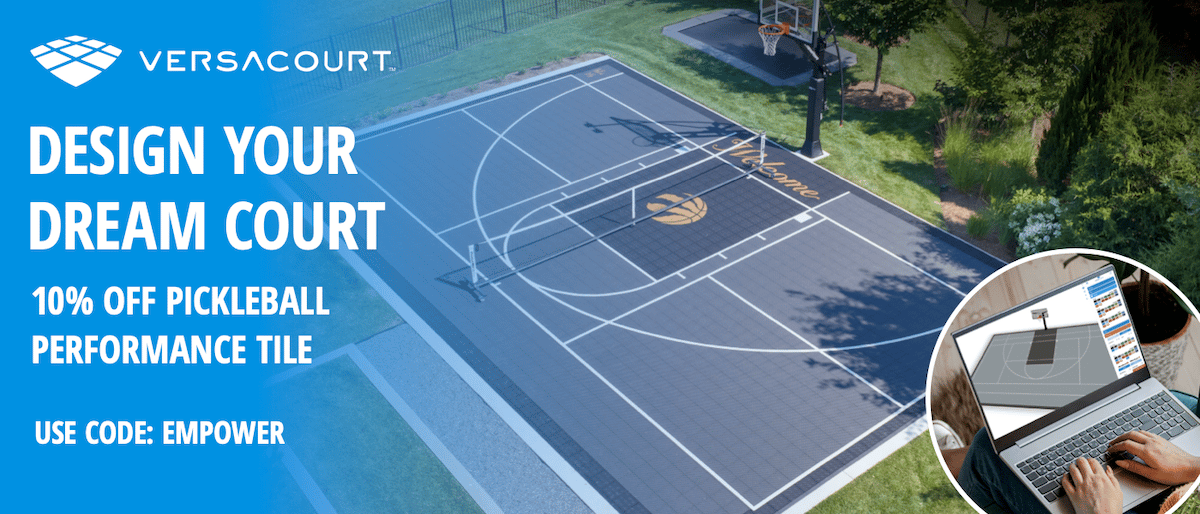
Paddles are evolving fast—but your court matters just as much. The VersaCourt pickleball performance tiles give you a cushioned, joint-friendly surface that’s built to handle the same rallies, spins, and speed-ups you’ve been reading in this guide.
Unlike concrete, these tiles stay cooler under the sun, absorb impact, and deliver a consistent bounce that makes every dink and drive feel right. And when you’re not playing pickleball? Swap in basketball, shuffleboard, or whatever keeps your crew moving.
👉 Exclusive for our readers: Use code EMPOWER for 10% off Pickleball Performance Tiles.
QUICK GUIDE
5-Minute Hand & Wrist Reset
Pickleball asks a lot from your hands and wrists—whether you’re gripping the paddle too tight during a rally or just feeling sore after a long match. A quick reset can go a long way in keeping you strong, flexible, and pain-free. These three simple exercises take less than five minutes and can be done anywhere.

Grip Strength Reset
How to do it: Make a fist and squeeze firmly for 5 seconds, then slowly release and spread your fingers wide.
Repeat: 5-10 times.
Why it helps: Releasing built-up tension restores circulation and keeps your grip from fatiguing too quickly.
Wrist Flexor Stretch (Palm Up)
How to do it: Extend one arm straight in front, palm up. With your other hand, gently pull back on your fingers until you feel a stretch along the inside of your forearm.
Hold: 10-20 seconds each side.
Why it helps: Stretches the muscles that tighten when gripping the paddle.
Wrist Extensor Stretch (Palm Down)
How to do it: Extend one arm in front, palm down. With your other hand, gently press the back of your hand downward until you feel a stretch on the top of your forearm.
Hold: 15-20 seconds each side.
Why it helps: Balances the wrist by loosening the opposite muscles, reducing risk of overuse injuries.
Tip: Work these in between games or at home—they’re quick resets your wrists will thank you for.
READER RECS
Your Go-To Paddles
We asked, you answered. Here’s what players in our community are swinging—and loving—right now:
💬 “I’ve been sticking with the Paddletek Bantam ALW-C 12.7 while I prep for a tournament. I have 7 different demos, and I like them all a little differently, but this one’s my favorite.” — Pickleball Greg
💬 “Paddles keep getting more expensive… but right now I’m loving the CRBN TruFoam.” — Anna, Texas
💬 “The Ronbus Ripple—unmatched power and pop, thanks to that rigid foam core.” — Senior Pro Player
Want to be featured? Make sure you’re following us on Instagram—we’ll ask for your gear tips, court hacks, and more!
COMMUNITY SPOTLIGHT
The Paddle Whisperer

For decades, Chuck Vietmeier has been shaping racquet sports equipment—first in tennis, now as Senior Product Manager at United Pickleball Paddles (Paddletek, ProXR, Boundless Pickleball), he’s helping define where pickleball gear goes next.
“The concept of dwell time—borrowed from tennis—is becoming the new frontier in paddle design. By increasing the time the ball sits on the paddle face, players gain more control and spin.”
From rethinking paddle shapes to experimenting with innovative cores and grips, Chuck is cutting through the marketing noise and reminding players: demo first, and find the paddle that truly fits your game.
👉 Read the full interview with Chuck Vietmeier.
QUICK GUIDE
On-the-Go Play: Top-Rated Portable Nets
A great paddle won’t get you far without a net to hit over. As pickleball outpaces permanent court construction, more players are turning to portable nets to keep games going in driveways, gyms, and parking lots (or that VersaCourt in their backyard). Here are three top options that bring the court with you:
🏆 Best for Durability: Dominator Rolling Portable Net
Premium aluminum frame, locking wheels, and built to last—the net you want if you’re setting up and breaking down every day.
🚗 Best for Portability: Selkirk Pro Portable Net
Lightweight and easy to move between venues or social play setups. Perfect if you’re short on storage or hauling gear in your trunk.
💸 Best Value: Tourna Portable Net
Lower cost, full regulation size, and reliable for casual play.
The paddle landscape is moving fast—foam, carbon, spin tech, quiet balls, portable nets, it’s all reshaping the way we play. But at the end of the day, the right gear is the one that feels good in your hand and keeps you coming back for more games.
Test it, tweak it, and trust your swing. The future of pickleball is already here—now it’s yours to play with.
How would you rate this Special Edition? |
Something we missed? Hit reply—we’re all about listening, learning, and getting better.
See you on the courts,
The Empower Pickleball Team
