- Empower Pickleball
- Posts
- When Pickleball's Rivals Suddenly Agree
When Pickleball's Rivals Suddenly Agree
A rare moment of unity, smarter ways to generate power, and what the indoor court boom really looks like.

Empower Pickleball
December 23, 2025


Last week, when we dug into the 2026 rulebook and asked what actually causes the most tension on court, the response was loud and clear. Line calls are brutal. And apparently, none of us are as calm about them as we think we are.
This time around, we’re shifting gears. A rare joint statement from some of pickleball’s most powerful organizations raised eyebrows across the community—not just because of what it addressed, but because of who showed up together. We break down why that moment felt bigger than paddles, and what it might say about the sport right now.
Also worth flagging: we’re running one of our biggest giveaways of the year, and yes, it’s still open. Scroll on so you don’t miss it.
Inside:
How rotational strength changes your power
Why indoor pickleball facilities keep popping up
What it actually costs to build a pickleball court
🧩 When Pickleball’s Rivals Suddenly Agree

Something unusual happened in pickleball recently. Several of the sport’s most influential organizations—many of which rarely align—released a joint statement condemning counterfeit paddles.
Joint statements are, by nature, coordinated. That part isn’t strange. What is strange is seeing this particular mix of organizations speak with one voice at all.
And then… silence.
A Rare United Front
The statement, released on December 19, came from APP Tour, DUPR, Major League Pickleball, PPA, UPA-A, USA Pickleball, and the World Pickleball Federation.
These groups serve very different roles within the sport. Some run tours. Some set standards. Some focus on international growth. Some are actively competing for influence, legitimacy, and control of the sport’s future. Alignment across that spectrum doesn’t happen often.
The message itself was straightforward: counterfeit paddles threaten competitive integrity and player safety. That’s true. Fake paddles bypass certification and testing, create uncertainty around performance and materials, and can mislead players who believe they’re purchasing legitimate equipment.
The Message Beneath the Message
What players reacted to wasn’t just what was said, but how it was handled. Identical language. Broad distribution. And then, nothing else.
No shared education plan made public. No clear guidance for players beyond “don’t use fakes.” No visible next steps that players could engage with or follow.
For some, the statement felt like overdue leadership. For others, it landed differently—more like coordinated brand protection than player advocacy, especially in a sport where governance is fragmented and trust is already thin.
Why This Feels Bigger Than Paddles
This moment highlighted a deeper tension in pickleball. If this level of cooperation is possible here, why does collaboration fall apart everywhere else?
Television rights. Pro contracts. Tour legitimacy. Court access. Player pathways. Ratings. Sanctioning. Those issues remain deeply fractured, often leaving players to sort out who does what—and who, if anyone, is actually representing them.
Counterfeit paddles may be the issue everyone agrees on, but the reaction exposed a bigger disconnect between leadership and the everyday players they serve. Unity showed up quickly—and disappeared just as fast.
Pickleball’s leading organizations rarely speak with one voice. So the real question isn’t whether counterfeit paddles are a problem—they are. It’s what it would take for this kind of cooperation to extend beyond protecting products—and into consistently protecting players.
🗳️ What did this joint statement feel like to you? |
🌎 Around the Picklesphere
🔁 When your serve gives everything away
👀 A different kind of pickleball brand
🫶 What actually mattered this year
⚙️ Where Pickleball Power Actually Comes From

BRING THIS TO THE COURT: Rotation beats raw power—every time. If your shots feel heavy without swinging harder, it’s probably not strength. It’s how well your body rotates and transfers energy from the ground up. Power in pickleball isn’t muscled. It’s coordinated.
Try this on court or in training:
Let your hips lead your forehand and backhand, not your arms
Focus on smooth rotation, not speed
Stay balanced so power feels controlled, not forced
Players who train rotation notice cleaner drives, deeper serves, and less shoulder fatigue—fast.
👉 Learn why rotational strength changes everything (and how to train it).
🎽 Gear Built for Real Pickleball Players
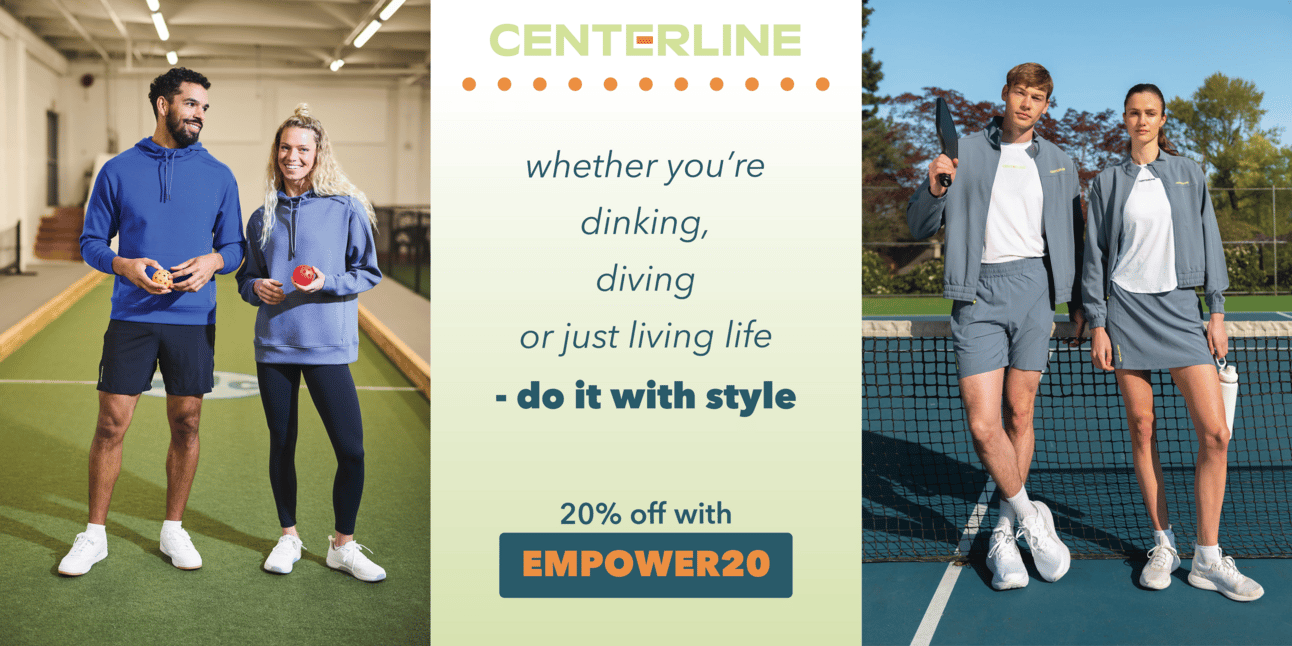
Performance starts before the first serve. Centerline designs apparel that keeps up—lightweight, breathable, and built with GripTek® details that help you stay locked in through fast hands and tough points.
No cling, no restriction, no distractions. Just gear that moves like you do—whether you’re dinking, diving, or just living life.
👉 Take 20% off your next order with code EMPOWER20 and feel what better gear can do for your game.
🎁 Win Pickleball Gear for the Next 5 Years

Five winners. Five years of premium pickleball paddles. Zero guesswork.
We’ve teamed up with Ramsports to give players a long-term paddle setup designed to last season after season—no constant upgrades, no scrambling when your paddle dies mid-year.
If you’re setting goals for how often you want to play in the year ahead, this is the easier win you’ll get. Entry takes seconds, and five people are walking away fully covered.
👉 Click here to enter the giveaway.
🏗️ Pickleball’s Indoor Boom Is Bigger Than You Think

Indoor pickleball facilities are popping up everywhere—not just in warm-weather states, but across the Midwest, Northeast, and fast-growing suburbs. With more than 1,500 indoor facilities already operating and hundreds more planned, year-round play is quickly becoming the norm, not the exception.
What’s changing isn’t just where we play, but how. Membership models, franchise expansion, amenities, and pricing all vary widely, and those choices directly affect access, cost, and community feel. If you’ve noticed new facilities opening near you and wondered what they’re really offering, this breakdown explains where indoor pickleball is headed next.
👉 Read the full breakdown on the indoor pickleball building boom.
FROM THE ARCHIVES
Before Carbon Fiber, There Was Plywood

Contributed by Jennifer Lucore, Pickleball Hall of Famer and historian — author of History of Pickleball — More Than 50 Years of Fun! • Visit allpickleball.com
💸 What a Pickleball Court Really Costs

If you’ve ever searched what it costs to build a pickleball court, you’ve probably seen numbers that feel… made up. One post says $5,000. Another says six figures. Both technically exist. Neither explains why the gap is so big.
The reality depends on what you’re building and where. Backyard touch-ups, full backyard builds, public courts, and indoor facilities all live in completely different financial worlds. Once you factor in site prep, drainage, lighting, permits, and long-term durability, the “cheap court” myth starts to fall apart fast.
👉 See the real numbers behind pickleball court builds.

January 12-18: PPA Masters - Rancho Mirage, CA
January 22-25: NPL Suncoast Open - Pinellas Park, FL
January 25-30: VibeGetaways Turks & Caicos with Neil Friedenberg - Providenciales, Turks & Caicos *Only a few sports remaining!
February 9-14: APP Kuala Lumpur Open - Selangor, Malaysia
January 19-25: PPA Indoor National Championships - Lakeville, MN
February 13-16: National Junior Pickleball Houston Regional - Houston, TX
February 18-22: APP Daytona Beach Open - Holly Hill, FL
March 5-8: National Junior Pickleball Eastern Regional - Raleigh, NC
Partner With Us?
Every week, our newsletter lands in inboxes of players who live and breathe pickleball. They come to us for the latest news, gear, drills, and stories that celebrate the people behind the sport.
Does your brand believe in growing the game and supporting the people who play it? Let’s make something happen.
